Language Transfer
- 4.9
- Rating
- 1.00M
- Installs
- Free
- Price

 Analysis by App-foxy
I like language-learning apps that respect my time, but I also know that a simple interface can feel confusing when I do not understand the intended routine. Language Transfer is a good example. It is a free education app from Language Transfer built around audio courses that ask me to think through a language rather than tap through a string of disconnected exercises. That approach feels refreshingly different, although it also means I need to pay attention and participate instead of treating each lesson as background noise.
After using it, my honest view is that this is best understood as a guided thinking course, not a complete replacement for every language-learning tool. The app is available at no cost, contains no advertising, purchases, or subscriptions, and is suitable for Everyone. Its average rating is 4.9 from around 16 thousand ratings, and it has passed 1 million installs, so it is clearly not an obscure experiment. Still, popularity does not remove the need to use it in the right way. The biggest difference between a rewarding session and a frustrating one is usually the learner’s workflow.
Where learners usually get stuck
The first adjustment is accepting that I am not supposed to sit back and listen passively. The lessons are designed to make me think about how a language works, often by prompting me to form an answer before hearing the explanation. If I press play while cooking, commuting, or doing chores, I may catch the general idea but miss the mental work that makes the lesson useful. That can make the course seem slower or less effective than it really is.
You May Also Like

 Blood Strike: 2.5 Anniversary
Blood Strike’s Loadouts Turn Every Drop Into a Tactical Gamble
A close look at Blood Strike’s custom loadouts: how fast access to signature weapons reshapes its battle royale rhythm, rewards preparation, and narrows the gap between fights.

 Pandora - Music & Podcasts
Pandora’s Music Is Easy to Start, but Harder to Recover
Pandora’s strength is its low-effort path from a seed to a station. Its weak spot is how much confidence it asks you to place in connection, setup, and quiet recovery.

 8 Ball Pool
 Is Built on Rivalries, Rematches, and Routine
A close look at the rivalries, rematches, shared routines, and unanswered safety questions that turn a quick pool match into a persistent mobile community.

 Samsung Music
’s Quiet Strength Is Playing What You Already Own
Its reach comes less from spectacle than from dependable access to a personal library. That simplicity is both the app’s strongest retention engine and its ceiling.

 AccuWeather: Weather Radar
AccuWeather Review: A Quick, Clear Forecast for Everyday Decisions
For everyday plans, the best forecast is the one you can understand quickly. AccuWeather makes rain timing, radar, and local conditions easy to act on, with a few trade-offs.

 Hill Climb Racing
Why Hill Climb Racing Still Turns Crashes Into One More Run
A tiny car, a bumpy hill and one more upgrade: Hill Climb Racing keeps resurfacing because its simple chaos makes every near-miss feel personal.
More From Our News Desk



My practical advice is to pause whenever the lesson gives me a question. I say my answer aloud, even when it feels awkward, and only then continue. The pause is not a technical interruption; it is part of the teaching method. If I let the recording run continuously, I turn an interactive reasoning exercise into ordinary listening practice. That is one of the least obvious but most important details for getting value from this app.
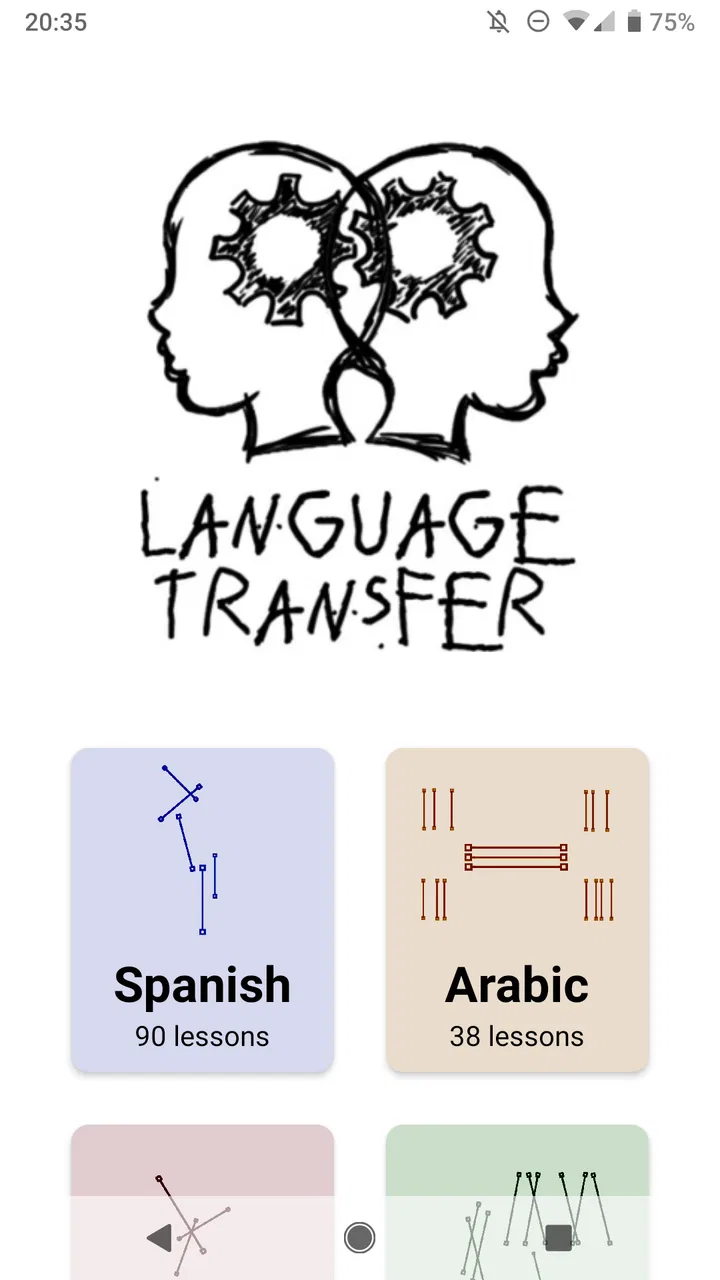
Another common sticking point is expecting a visual lesson dashboard to explain everything immediately. Language Transfer is centered on its audio courses, so the experience can feel unusually spare beside modern apps filled with streaks, badges, animated characters, and daily challenges. I do not see that simplicity as a flaw by itself, but it requires me to create my own structure. I need to remember where I stopped, decide when to review, and keep track of questions that still feel uncertain.
A realistic everyday routine is a short, focused session at a desk before work. I open the course, keep a notebook nearby, listen to one lesson, pause for every prompt, and write down only the patterns I could not reconstruct. Later that day, I revisit those notes before starting the next lesson. This works better for me than playing several lessons in a row, because the reasoning has time to settle and I can notice whether I am actually producing answers rather than recognizing them after the recording supplies them.
What the learning method demands from me
The app’s central strength is that it encourages me to understand connections instead of memorizing isolated translations. When a lesson explains why a structure works, I can often reuse that idea with new words. That is more satisfying than collecting vocabulary cards, and it gives me a clearer sense of the language’s internal logic. It is especially helpful if I enjoy asking “why?” and want a course that treats me as an active learner.
The trade-off is that this method can feel demanding when I am tired or when I want quick entertainment. A learner who prefers visual repetition, instant scoring, or a game-like reward loop may find the sessions too quiet. Someone preparing for a very specific exam may also need another resource for exam formats, timed practice, reading tasks, or writing feedback. I would not choose Language Transfer as my only tool if my immediate goal required broad practice across every language skill.
I also would not mistake understanding a lesson for being fluent. The reasoning can help me build a strong foundation, but I still need exposure to real speech and opportunities to use the language with other people. The app can make grammar and word formation feel more approachable; it cannot by itself provide every conversation, listening environment, or correction I may eventually need.
Simple setup checks before blaming the app
My first setup check is the obvious one: I make sure the device can play audio clearly and that the volume is high enough to hear both the explanation and the pauses. Because the lesson depends on spoken prompts, poor sound is more disruptive here than in an app where I can rely on text. I also avoid starting a session while another audio app is competing for playback, since a crowded audio environment makes it harder to follow the sequence.
I then choose a predictable place for studying. I keep headphones available for public spaces, but I prefer a quiet room when a lesson introduces a difficult idea. This is not about creating a perfect study environment. It is about reducing the small distractions that encourage me to skip the thinking pauses. If I am constantly interrupted, I stop remembering which question I was considering, and the lesson loses its rhythm.
Before beginning, I decide what “finished” means for that session. For me, that might be one lesson listened to attentively, rather than an arbitrary amount of time. This prevents the common mistake of rushing through several recordings just to feel productive. I also keep a note of the last completed lesson and a short list of topics that need another pass. That manual habit is useful because the app’s minimalist presentation does not replace my own study plan.
New users may wonder whether they need to pay before trying the method properly. They do not: the app is free, and its store summary specifically emphasizes the absence of ads, purchases, and subscriptions. That makes experimentation easy. I can give the approach a fair trial without worrying that a useful course is hidden behind a payment step. The important investment is attention, not money.
The Everyone age rating also makes it approachable for households and younger learners, but I would still judge suitability by learning maturity rather than the label alone. A child who enjoys answering aloud and can follow an audio explanation may benefit. A learner who needs constant visual guidance may require an adult to help establish the routine. The rating tells me the content is broadly suitable; it does not guarantee that the teaching style matches every age or attention span.
Recovering when a lesson goes wrong
When I lose the thread, I do not immediately restart the entire course. I go back to the last point where I could still explain the reasoning in my own words. Then I replay that portion, pause before the answer, and try again without looking at notes. This is more efficient than repeating familiar material from the beginning, and it helps identify whether the problem is one missing concept or simple distraction.
If I have listened while multitasking, I treat that session as incomplete rather than pretending it counts as study. This is a useful distinction. Background listening may still expose me to pronunciation and rhythm, but it is not the same as actively solving the prompts. I replay the lesson later when I can respond. That small change keeps my expectations realistic and prevents me from blaming the course for a routine that did not give it a fair chance.
Another helpful recovery method is to explain the lesson to myself in plain language. I might write a short example, say it aloud, and then create a second example using a different word. If I can repeat the original explanation but cannot adapt it, I probably recognize the pattern without fully controlling it. Language Transfer is particularly well suited to this kind of self-check because its lessons encourage reasoning; my own examples reveal whether that reasoning has transferred.
I also avoid stacking confusion. If one idea is still unstable, I do not keep adding new lessons simply because the next recording is available. I mark the troublesome point, review it during the next session, and continue only when I can make a reasonable attempt. This slower workflow may look less impressive than racing through a course, but it produces a more honest picture of progress.
When the app is not the cause
Sometimes the frustration comes from comparing this experience with the wrong alternatives. Vocabulary-first apps are often better when I want quick word exposure, reminders, or short visual drills. Conversation platforms are better when I need live interaction and spontaneous correction. Textbook-style courses may be better when I want explicit reading and writing assignments. Language Transfer occupies a different place: it is strongest when I want a thoughtful audio explanation that helps me see relationships between forms.
That does not make it universally superior. If I need pronunciation feedback, I should not expect the app alone to tell me whether my accent is understandable. If I need a large bank of written exercises, I may prefer a course with more visible practice material. If I am studying in a noisy environment and cannot concentrate on spoken prompts, the format itself becomes a limitation, not a problem with my phone or connection.
Motivation can also be the real issue. The absence of ads, purchases, and subscriptions is welcome, but it means there is no payment pressure pushing me back into the app. There may also be fewer game-like rewards than I am used to. I need to supply the habit myself. For an independent learner, that is liberating. For someone who depends on streaks, notifications, or competitive goals, another app may be easier to maintain consistently.
The same applies to progress expectations. A strong lesson can improve how I understand a construction, but it will not instantly make me comfortable in a conversation. I measure success by whether I can reconstruct an idea, recognize it in new examples, and gradually use it without the recording. If I judge the app only by how many words I can recite after a session, I miss its main benefit.
Who should make room for it in a study plan
I would recommend Language Transfer to learners who enjoy audio, want explanations rather than memorization alone, and are willing to answer questions aloud. It is also a good fit for people who dislike subscription-heavy learning products and want to try a course without financial commitment. The developer’s focus is clear in the way the app puts the lesson itself ahead of commercial distractions.
I would be more cautious for absolute beginners who need a highly visual interface to stay oriented, learners who rarely have quiet listening time, and students whose main target is formal writing or exam performance. Those users may still find the reasoning useful, but they should pair it with resources designed for their specific gaps. I would also skip it as a sole resource if my goal were immediate conversational confidence, because conversation requires practice that an audio course cannot fully simulate.
Compared with the usual alternatives, the app’s most valuable difference is not a larger feature list; it is the way it asks me to participate mentally. I get less of the instant feedback and visible progress common in gamified products, but I gain explanations that can make unfamiliar language feel less arbitrary. That is a meaningful trade when I care about durable understanding more than a polished reward system.
My practical verdict after using it
Language Transfer is one of those apps that rewards a deliberate routine. I would install it before a trip, during the early stage of learning a new language, or whenever I felt that memorization was not giving me a usable framework. I would start with short sessions, answer every prompt aloud, keep simple notes, and review the last difficult idea before moving forward. Those habits matter more here than chasing a daily target.
Its limitations are real: the audio-centered format is not ideal for every environment, independent organization is required, and it does not replace conversation, pronunciation feedback, or broad reading and writing practice. Still, the free access and lack of advertising, purchases, and subscriptions make it unusually easy to test without risk. The high average rating and large install base suggest that many learners appreciate its approach, but I would choose it because the method suits me, not because of a number.
My final recommendation is simple: try it when you want to understand how a language fits together, and give the lessons your full attention. If you want a game, a vocabulary drill, or a complete all-skills curriculum in one place, look elsewhere or use this alongside another resource. If you are curious, patient, and willing to think before the answer is revealed, this education app can become a genuinely useful foundation rather than just another icon on your phone.
FAQs for Language Transfer
01What is Language Transfer, and how does it work?
Language Transfer is an audio-based language learning course designed to help you understand how a language works rather than memorize isolated vocabulary. The instructor guides you through conversational lessons, asking questions and encouraging you to build sentences aloud. The method focuses on connections between languages, pronunciation, grammar patterns, and active thinking, making it feel more like a guided lesson than a traditional flashcard app.
02Which languages can I learn with Language Transfer?
Language Transfer offers courses for several languages, including Spanish, Greek, Turkish, Arabic, Swahili, German, French, and Italian, although course availability and completion may vary. The Spanish course is especially well known and widely used by beginners. Before downloading, check the current course list because new material may be added over time, while some languages may have only introductory or partially completed content.
03Is Language Transfer suitable for complete beginners?
Yes, Language Transfer is generally suitable for complete beginners because the lessons introduce concepts gradually and explain why words and sentence structures work the way they do. You do not need previous study experience to begin. However, the course expects you to participate actively by pausing, thinking, and answering aloud, so it may feel demanding for users who prefer simply listening or tapping through short exercises.
04Does Language Transfer require an internet connection or cost money?
Language Transfer is available free of charge, which makes it an attractive option for learners who want structured instruction without a subscription. Lessons are primarily audio-based and can be streamed through the app or website. Depending on the platform and course, you may be able to download lessons for offline listening, but it is sensible to download content while connected to Wi-Fi if you plan to study while traveling.
05What are the main limitations of Language Transfer?
Language Transfer is excellent for developing understanding, sentence formation, and confidence with a language, but it is not a complete replacement for every type of practice. It provides limited opportunities for extended reading, writing, vocabulary review, or real-time conversation with other speakers. Learners who want balanced fluency should combine it with listening to native content, reading, speaking practice, and additional vocabulary or grammar resources.
Pros
- Free lessons with no subscriptions or in-app purchases.
- Audio-based format works well while commuting or walking.
- Clear explanations make grammar patterns easier to understand.
- Courses are structured in a logical progression for beginners.
- Lessons can be revisited whenever you need extra practice.
Cons
- Limited interactive exercises compared with many language-learning apps.
- No built-in speaking recognition or pronunciation scoring.
- The app offers little support for advanced learners.
- Progress tracking and achievement features are quite basic.
- An internet connection may be needed for some lesson content.

Language Transfer
Gallery